You’ve run the numbers. You know what you’re paying in rent. You’ve done the math on what that same money could do in a smaller market, and the gap is hard to ignore. But every time the conversation gets serious, the same question comes up: What happens to our social life?
It’s not a small concern. For couples in their mid-30s who’ve built a life in the Bay Area — the restaurants, the events, the friends who live ten minutes away — the idea of trading that for a quieter town can feel less like a financial upgrade and more like a personality transplant. You’re not trying to become hermits. You just want to stop paying $3,200 a month for a two-bedroom you’ve outgrown.
Here’s the honest answer: the isolation fear is legitimate, and it’s worth taking seriously. But for Hollister specifically, most people are working off an image that doesn’t match what the town actually is in 2024. So let’s talk about what the social infrastructure here looks like on the ground — not the Chamber of Commerce version, but the real one.
What Most Bay Area Transplants Get Wrong About Small-Town Social Life
The assumption is that smaller population equals fewer connections. And in some places, that’s true. But social density isn’t just about how many people live in a city — it’s about how accessible those people are, and whether the culture of a place makes it easy or hard to meet them.
In the Bay Area, you can live in the same apartment building for three years and never learn your neighbor’s name. The city is full of people, but anonymity is practically baked into the infrastructure. You have to work hard to build community there, and a lot of people never quite crack it.
Hollister works differently. It’s a tight-knit community in the most literal sense — people know each other, they show up to the same events, they remember your name at the local spots. For couples relocating from the Bay, the most common thing we hear after the first six months isn’t “I’m lonely.” It’s “I didn’t expect to feel this settled this fast.”
That’s not marketing. That’s what people actually tell us.
The Social Infrastructure Nobody Tells You About
Let’s get specific, because vague reassurances aren’t useful.
The Hollister Rally. Every July, the town hosts one of the most well-known motorcycle rallies in the country — the event that inspired The Wild One. It’s not just a biker thing. It’s a whole-town event that draws tens of thousands of people and creates the kind of shared community experience that most cities manufacture badly and charge a lot for. If you want a crash course in meeting people in Hollister, show up for Rally weekend.
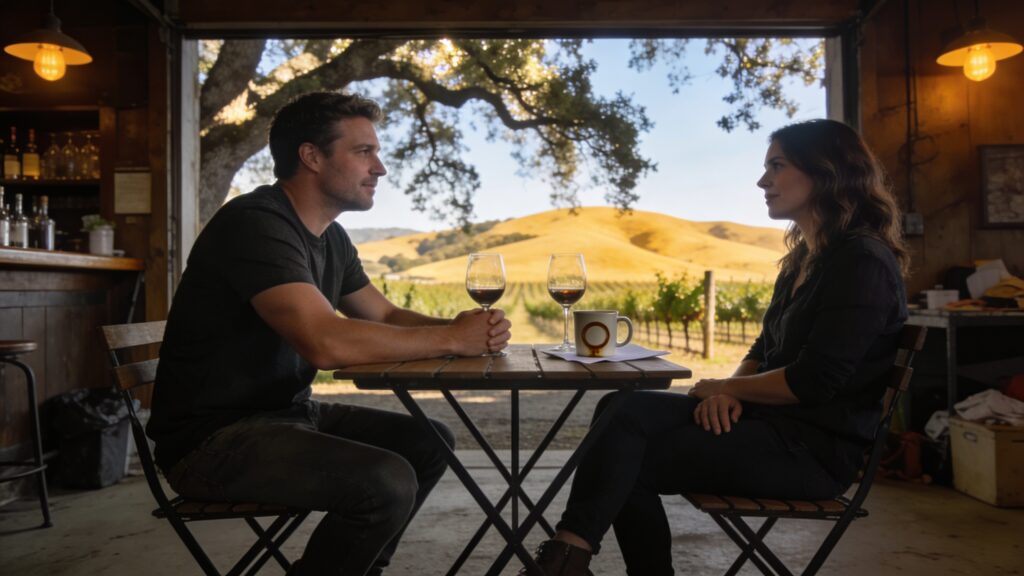
Local vineyards and wine culture. San Benito County has a wine scene that most people outside the region don’t know exists. Wineries like Leal Vineyards and DeRose Winery are legitimate operations — not tourist traps — and they attract a regular crowd of locals and visitors who treat them like the social anchors they are. Weekend afternoon at a local vineyard is a genuinely common way people spend time here, and it’s the kind of low-pressure environment where friendships actually form.
Pinnacles National Park is 30 minutes away. If your social life in the Bay Area revolved around hiking, climbing, or outdoor activities, you’re not giving that up — you’re upgrading it. Pinnacles is a world-class park with rock climbing, cave exploring, and condor sightings, and it’s essentially your backyard. The outdoor recreation community in this region is active and welcoming, and it’s one of the fastest ways new residents find their people.
Ridgemark Golf Course and Santana Ranch neighborhoods. These aren’t just places to live — they’re built-in social ecosystems. Ridgemark has a golf course and a community feel that draws people who want to know their neighbors. Santana Ranch is a newer development that’s attracted a lot of families in similar life stages, which means if you’re a couple in your mid-30s thinking about starting or growing a family, you’re moving into a neighborhood where that’s already happening around you.
The food and local business scene. Hollister has a genuinely good local restaurant scene that’s grown meaningfully in recent years. These aren’t chains filling a strip mall — they’re owner-operated spots where the staff knows regulars, where you actually become a regular, and where a Friday dinner out feels like a social event rather than a transaction.
Proximity to Everything You Think You’re Leaving Behind
Here’s something that gets overlooked in the Hollister conversation: you’re not actually moving to the middle of nowhere.
Hollister sits about 50 miles from San Jose. That’s a real drive, yes, but it’s not an impossible one — and for remote workers who’ve already eliminated the daily commute, a monthly trip back to the Bay Area for a concert, a dinner, or a weekend with friends is genuinely manageable. You’re not severing ties. You’re just changing the frequency.
Gilroy is 20 minutes north. Morgan Hill is 30. Salinas and the Monterey Peninsula — Carmel, Pacific Grove, the coast — are about 45 minutes to an hour south. That means on any given weekend, you have access to the Monterey Bay Aquarium, Carmel-by-the-Sea, Big Sur, and some of the best coastline in the state. The cultural radius from Hollister is larger than most people realize when they first look at a map.
For couples who love to travel or explore, this is actually a significant quality-of-life point. You’re not trading access for affordability. You’re trading traffic and rent for a home base that happens to be close to a lot of things worth doing.
The Part Nobody Talks About: How Small Towns Actually Build Faster Friendships
There’s a social dynamic in smaller communities that takes most Bay Area transplants by surprise: people are genuinely interested in who you are.
When you’re new to a small town, you’re noticed. Not in a surveillance way — in a “hey, haven’t seen you before, where are you from?” way. The barriers to conversation are lower. People aren’t performing busyness. They’re not rushing past you on a crowded sidewalk. The culture of a place like Hollister is one where showing up consistently — to a local event, a farmers market, a vineyard, a youth sports game — translates into actual relationships faster than years of living in a dense city sometimes does.
We’ve watched this happen with clients who relocated here skeptical and became genuine advocates for the community within a year. Not because Hollister is perfect — it’s a real town with real limitations — but because the social mechanics of a tight-knit community work differently than the social mechanics of a city, and for a lot of people, they work better.
The fear of isolation is worth taking seriously. But the honest answer is that for the right kind of person — someone willing to show up, get involved, and let a new community become their community — Hollister tends to reward that pretty quickly.
The Practical Takeaway
If you and your wife are genuinely weighing this move, the isolation question deserves a real answer, not a sales pitch. Here’s what we’d actually suggest: come spend a weekend here before you decide anything. Not a house-hunting trip — just a weekend. Eat at a local spot, drive through Ridgemark and Santana Ranch, take an afternoon out to one of the vineyards, and see how the town actually feels on a Saturday.
The numbers on Hollister real estate are hard to argue with for Bay Area transplants looking to build equity without extending themselves financially. But the lifestyle question is just as important, and the only way to answer it honestly is to experience it yourself.
If you want a straight-talking conversation about what the Hollister market looks like right now — and what it would actually mean for your situation — we’re easy to reach. Call or text us at 831-902-0472, or send an email to israel@ighomes.com. No pressure, no pitch. Just a real conversation with people who live here and know what the numbers actually say.